Which Test Do You Need? A Guide to Mold, Odor, Asbestos and Air Quality Testing
The right test depends on what you notice. A musty smell calls for moisture readings and mold air samples. A chemical smell calls for VOC sampling. Smoke calls for soot sampling. This page lists what each sign points to, the numbers we measure against, and the standards and lab methods we follow.
What the sign points to, and the test that answers it.
We pick the sampling after the walkthrough, so you only pay for tests the building actually calls for. These are the usual matches.
Musty or earthy smell
Points to: hidden moisture and mold, in a wall, a basement, under flooring or in the HVAC system.
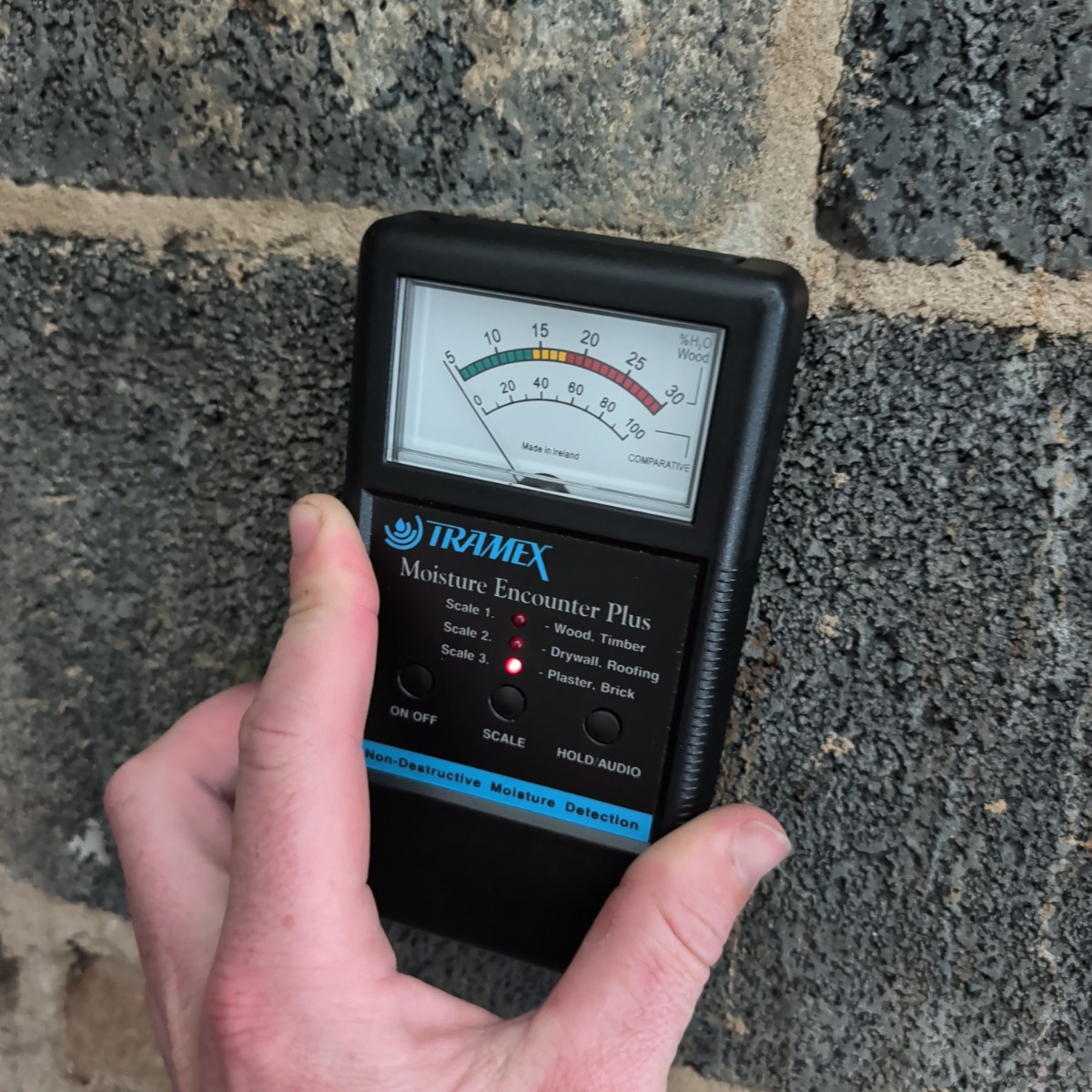
Test: moisture readings and a thermal scan, then spore trap air samples compared to an outdoor control taken the same day.
Chemical, solvent or new-paint smell
Points to: VOCs from paints, adhesives, flooring, furniture or products used in a renovation.
Test: VOC air sample by EPA Method TO-15 in a Summa canister, and formaldehyde by TO-11A or NIOSH 2016.
Smoke smell or soot
Points to: residue from a fire or furnace puff-back, in your home or next door.
Test: surface samples for soot, char and ash, analyzed by a laboratory following ASTM D6602.
Musty smell when the AC or heat runs
Points to: the air handler, coil, drain pan or ducts.
Test: an HVAC inspection with a borescope, with surface or air samples where growth is suspected.
A dark spot or visible growth
Points to: mold, or staining that only looks like it.
Test: a swab or tape lift sent to an accredited lab, with moisture readings to find why it grew there.
A leak, burst pipe or flood
Points to: wet materials you cannot see behind walls, floors and ceilings.
Test: room-by-room moisture mapping with infrared, and the water category and class under IICRC S500.
Renovating an older building
Points to: possible asbestos in plaster, joint compound, floor tile, mastic or pipe insulation.
Test: bulk samples by an accredited inspector, analyzed by polarized light microscopy at an NVLAP-accredited lab.
Rotten egg or sewer smell: often a dry drain trap or a plumbing vent problem. Run water in unused drains first. If you think you smell gas, leave the home and call your gas utility or 911.
What we measure against.
A reading only means something next to a reference. These are the ones we use most.
There is no pass or fail number for mold in the air.
There are no regulatory limits for airborne mold spores indoors. A result is read by comparison, together with what we find on site.
- Outdoor control. Every set of indoor samples is compared to an outdoor sample taken the same day.
- Spore types. Which kinds are present indoors matters as much as how many.
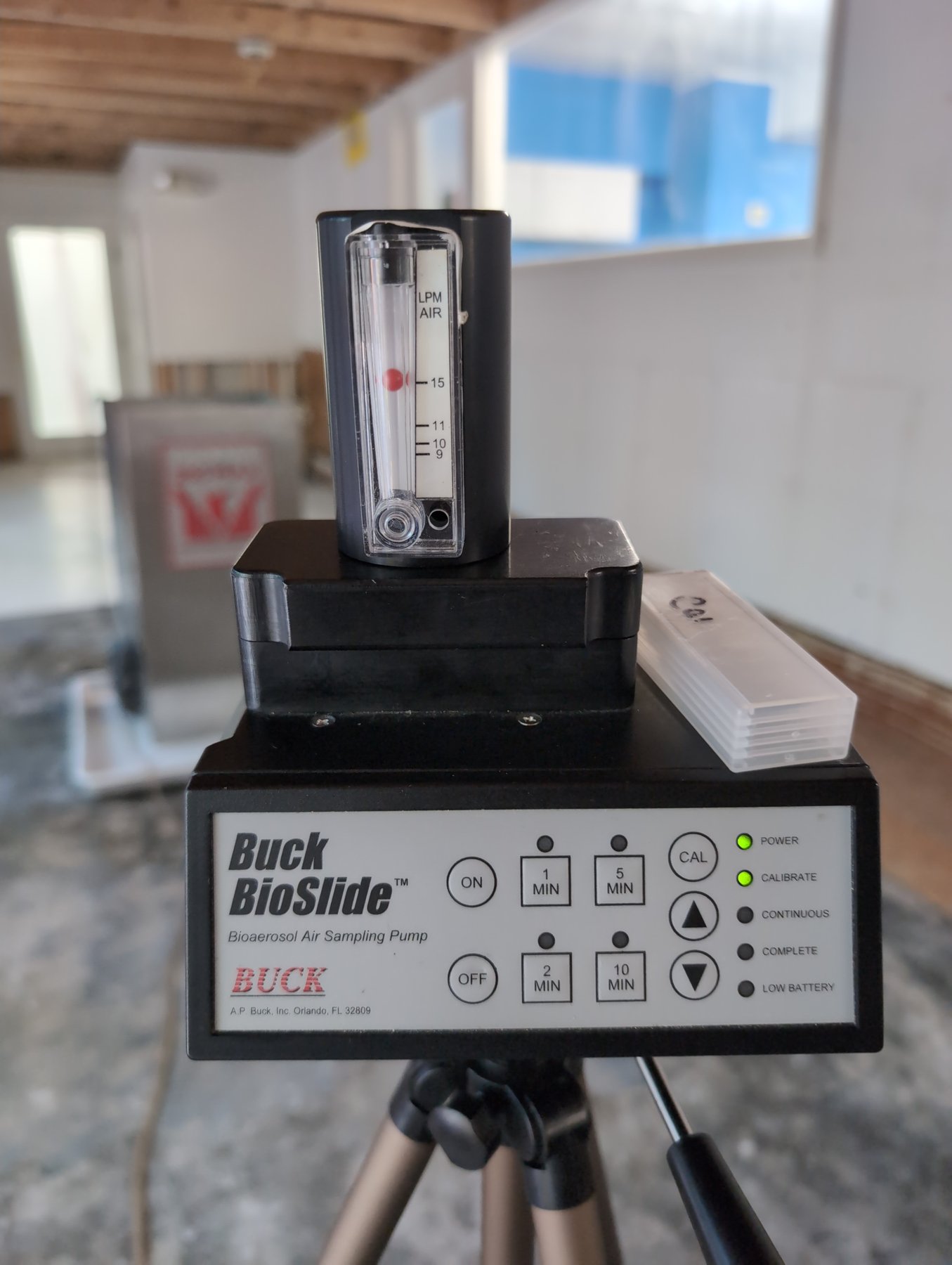
- A measured sample. A calibrated pump draws 75 liters of air through a spore trap cassette over five minutes in each room of concern.
- The building. Moisture readings, humidity and visible conditions decide what the lab numbers mean.
What we follow, and what each one covers.
ANSI/IICRC S520
The mold remediation standard. We interpret results against it, write remediation protocols to it, and use its Condition 1 (normal fungal ecology) as the goal for clearance.
IICRC S500
The water damage standard. It sets the category of water (clean, gray or black) and the class of loss, which drive what can be dried and what must be removed.
ANSI/IICRC S700 and S590
The framework for fire and smoke damage, and for HVAC systems affected by it. Our soot reports frame cleaning recommendations by these.
EPA Method TO-15
VOC air sampling in a Summa canister, run for 8 to 24 hours in a home (24 hours gives the best result). The lab reports a speciated list of compounds.
TO-11A, NIOSH 2016 and TO-17
Formaldehyde and related aldehydes on a DNPH cartridge, and sorbent tubes for specific target compounds when the question calls for them.
ASTM D6602
Laboratory screening of surface samples by light, polarized-light and phase-contrast microscopy, reporting soot, char and ash by sample.
AHERA
The asbestos inspection framework. It sets the number of bulk samples for each material type, collected by an accredited inspector under chain of custody.
PLM, PCM and TEM
Asbestos lab methods: polarized light microscopy for bulk materials, phase contrast microscopy for air fiber counts, and transmission electron microscopy where the project calls for it.
Accredited laboratories
Mold samples go to an EMLAP-accredited laboratory and asbestos samples to NVLAP-accredited labs, every sample under chain of custody.
Short answers.
What test do I need for a musty smell?
Start with moisture, not sampling. We take moisture readings along the walls and floor and scan with infrared, check the HVAC system, then take spore trap air samples against an outdoor control. The report shows where the water is and whether the air is affected.
What test do I need for a chemical smell?
VOC air sampling by EPA Method TO-15 in a Summa canister, and formaldehyde on a DNPH cartridge when new cabinets, flooring or furniture are involved. The lab reports a list of compounds, and we explain which ones matter and where they likely come from.
Is there a safe level of mold in the air?
There are no regulatory limits for airborne mold spores indoors. That is why we compare your indoor results and spore types to an outdoor sample taken the same day, together with what we find on site.
How dry should drywall and wood be?
Drywall above 16% WME is elevated and conducive to mold. Wood framing should read at or below 19% moisture content. EPA guidance is to dry wet materials within 24 to 48 hours to prevent mold growth.
When do I need an asbestos test?
Before renovation or demolition that disturbs building materials. Any building built before 1981 is presumed to contain asbestos until sampling shows otherwise, and many newer buildings contain it in joint compound, floor tile, mastic and roofing.
What radon level is a problem?
The EPA sets its action level at 4.0 pCi/L and recommends considering a fix between 2 and 4. A continuous monitor on the lowest lived-in level for at least 48 hours gives the number.
How long do results take?
For mold, the report usually comes within two business days of receiving the lab results, and a 24-hour rush is available. VOC canisters and soot samples follow the laboratory's timeline, and we give you that before we sample.
Do you fix what you find?
No. We only inspect and test, so our findings are not tied to a repair estimate. If work is needed, the report tells your contractor exactly what and where.
Not sure which test fits? Tell us what you notice.
Weekdays 8 to 5. The phone consultation is free. We serve Washington DC, Maryland and Northern Virginia, and commercial buildings anywhere.