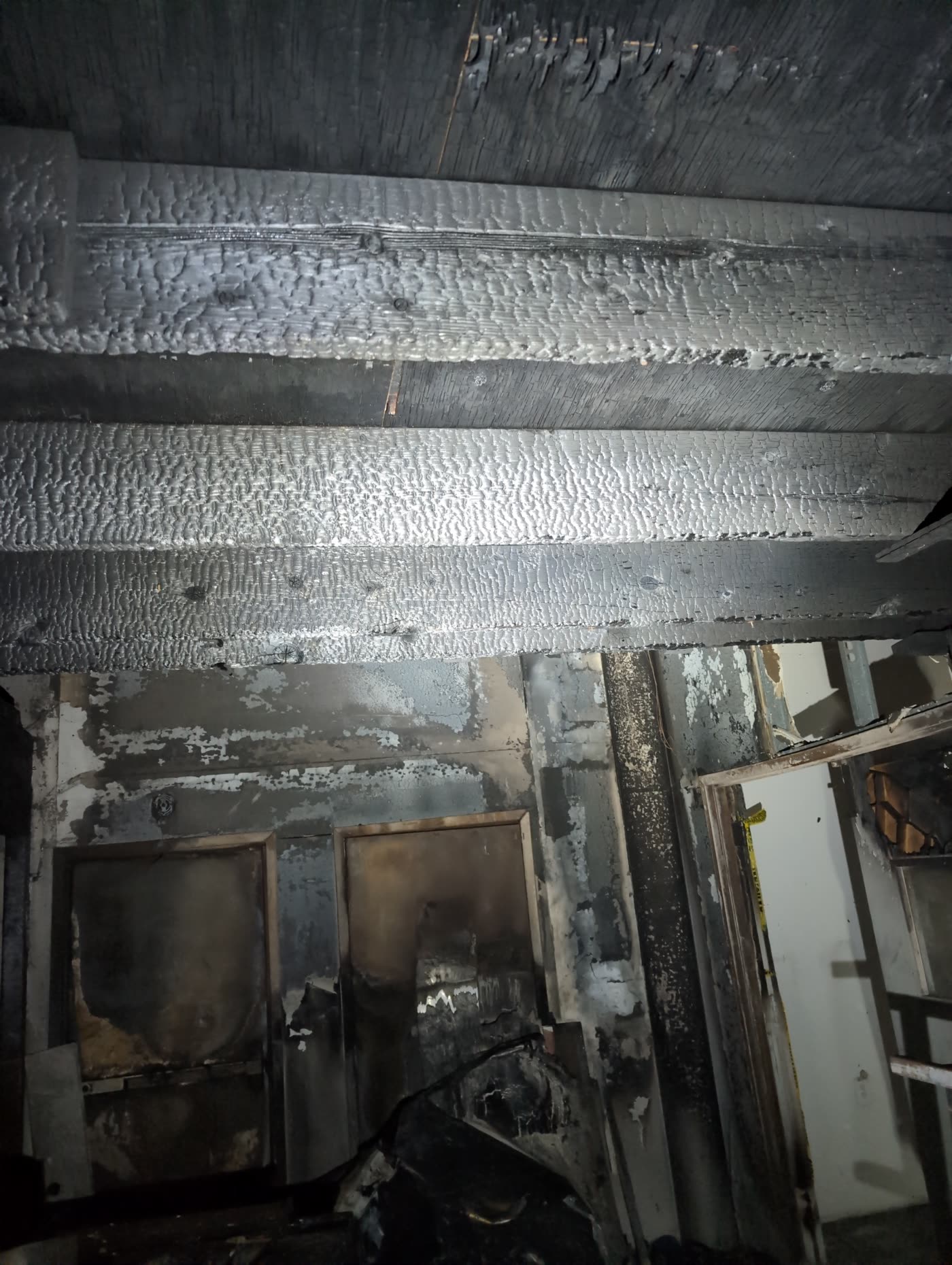
Smoke and Soot Testing After a Fire
A combustion by-products assessment shows which rooms and systems a fire actually reached. We sample surfaces for soot, char and ash, have them analyzed by a laboratory, and give owners, adjusters and contractors one independent report to work from.
Did the smoke reach this room?
After a fire, the scope of cleaning or demolition often comes down to that question. Smell and appearance are not enough to settle it. Particles under a microscope are.
- Room by room. We sample the area of the fire, the path smoke would have traveled, and the rooms beyond it, so the results show where deposition stops.
- HVAC included. Ductwork and registers can carry smoke through a building, so they are part of the assessment.
- Either answer. Sometimes the results support a wider scope, sometimes a narrower one. The report states what was found.
- Residential and commercial. Single-family homes, condos, apartment buildings and commercial space.

Tape lifts, a microscope and a map.
Fire history and walkthrough
Where the fire started, how it was put out, what has been cleaned already, and how air moves through the building.
Surface tape lifts
A strip of clear tape is pressed onto a surface and placed on a slide. We sample surfaces that have not been cleaned since the fire, such as the tops of doors and frames, ledges, ductwork and registers.
Laboratory analysis
A laboratory screens each sample by light, polarized-light and phase-contrast microscopy, following ASTM D6602, and reports soot, char and ash by sample.
Weight of evidence
There are no regulatory limits for soot on indoor surfaces. We read the lab results together with the fire history, the visual findings, where particles were and were not found, and HVAC pathways.
Written report
A results table by location, an annotated floor plan, and recommendations framed by ANSI/IICRC S700 for cleaning and ANSI/IICRC S590 for HVAC systems.
After restoration
Once cleaning is done, a post-restoration verification uses the same method to confirm the affected areas were cleaned.
One report everyone can work from.
Owners and managers
Know which rooms need professional cleaning, which do not, and whether the HVAC system needs attention before you move back in.
Adjusters and carriers
Independent documentation of where fire-related particulate was found, for scoping a claim on evidence instead of opinion.
Restoration contractors
A sampled baseline before work starts and verification when it is finished, from a firm that does not compete with you for the cleanup.
A dryer fire and a corridor.
After a dryer fire, smoke moved down a corridor. We sampled along the corridor and then in every other room. The other rooms showed very little deposition, so the report did not support cleaning or replacing materials throughout the whole home.
- Symptoms still count. When occupants report coughing or irritation, the report says so, and we can upgrade the analysis to scanning electron microscopy or add air testing.
- Honest limits. Microscopy identifies particle types. It cannot prove which fire a particle came from, and the report says that plainly.

Common questions.
Is there a legal limit for soot on surfaces?
No. There are no regulatory surface limits or universally accepted numbers for fire-related particulate indoors. That is why we use a weight-of-evidence approach with ANSI/IICRC S700 as the framework, and say how we reached each conclusion.
Should we clean before you test?
Call us before cleaning if you can. Surfaces that have not been cleaned since the fire tell us the most. If restoration has started, we sample areas that were not touched, such as door tops, ledges and ductwork.
Can you tell which fire the soot came from?
Not with certainty. Microscopy identifies soot, char and ash, but not the source. We weigh the results against the fire history, where particles were found and how air moves through the building, and the report states that limit.
What if the results are borderline or people feel sick?
We can upgrade the analysis to scanning electron microscopy for more detail, or add air testing. We do not perform medical or exposure assessments; the report covers surfaces and building conditions.
Do you do the cleanup?
No. We do not sell restoration, so we have no stake in how large the scope turns out to be. After cleaning, we can verify the work.
Had a fire? Talk to an industrial hygienist.
Weekdays 8 to 5. Tell us what happened and we will quote it on the call.