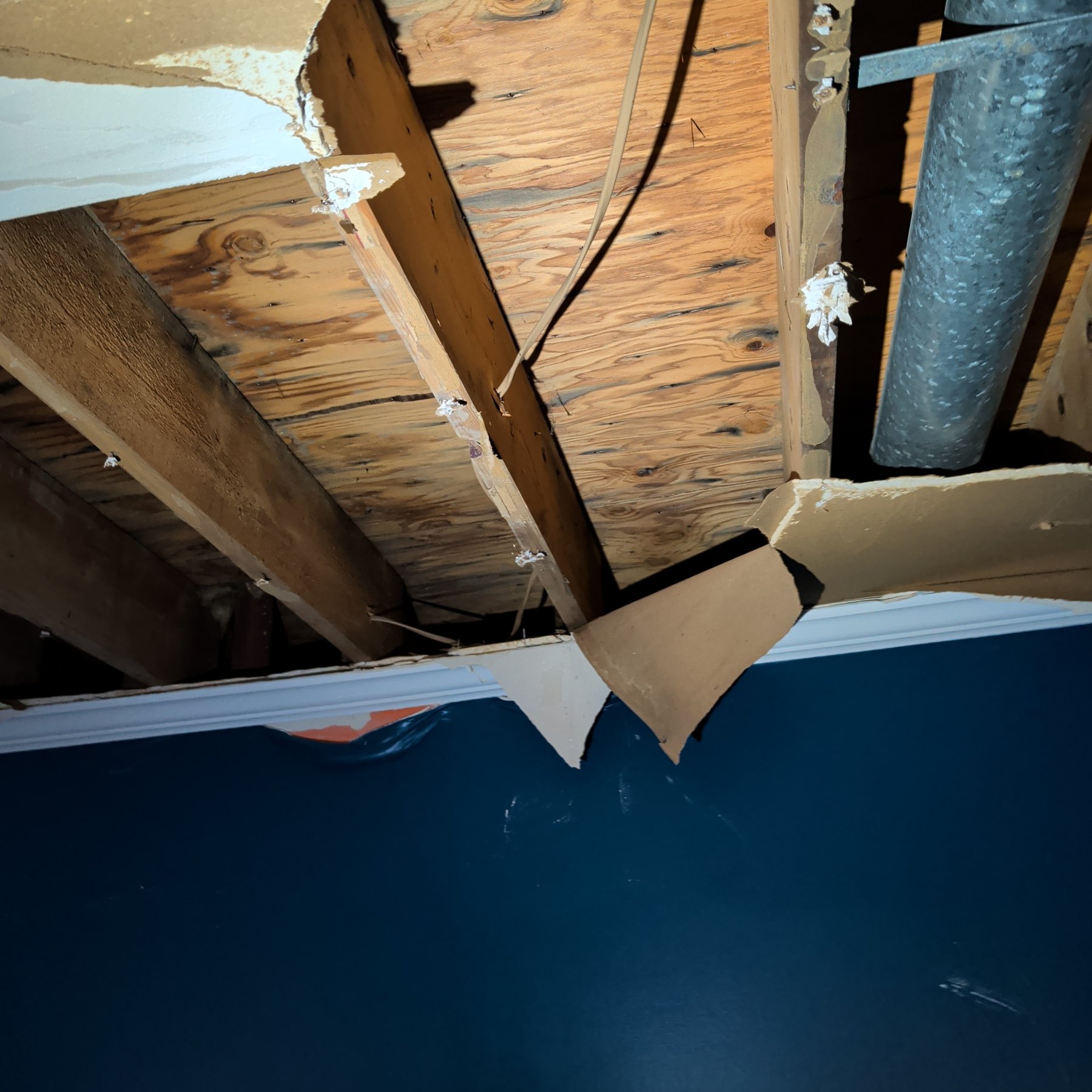
Water Damage Assessment and Moisture Mapping in DC, Maryland and Virginia
After a leak, a flood or a burst pipe, the questions are how far the water went, what it touched and whether it has been dried. We answer them with meters and infrared, in a report your insurer and your contractor can work from.
The extent, the category and whether it is dry.
- Room-by-room moisture readings on drywall, framing, flooring and subfloor, with the wet boundary marked on a moisture map.
- Category of water (clean, gray or black) and class of loss per IICRC S500, which drives what can be dried and what must be removed.
- Infrared thermography to find wet material behind finishes without opening walls.
- Humidity and temperature readings, and the condition of the HVAC and any drying equipment on site.
- Mold sampling when the water has been there long enough for growth, and a remediation scope if it has.
Every wet wall, drawn on your floor plan.
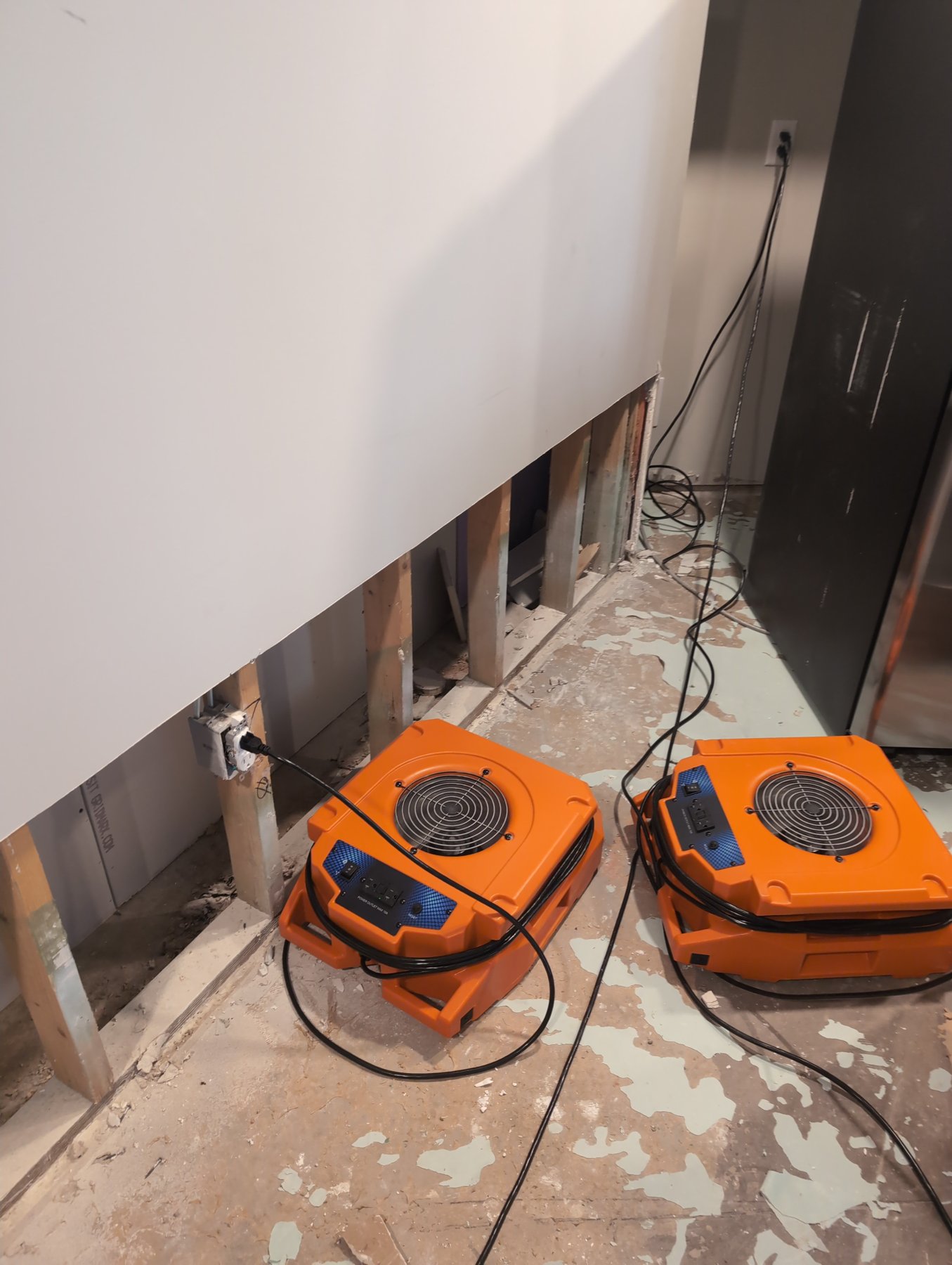
Readings are marked where they were taken, and each affected wall is drawn by how high the water wicked: a low flood cut, a 4 foot cut or floor to ceiling. The adjuster gets a scope they can price, and only wet material comes out.
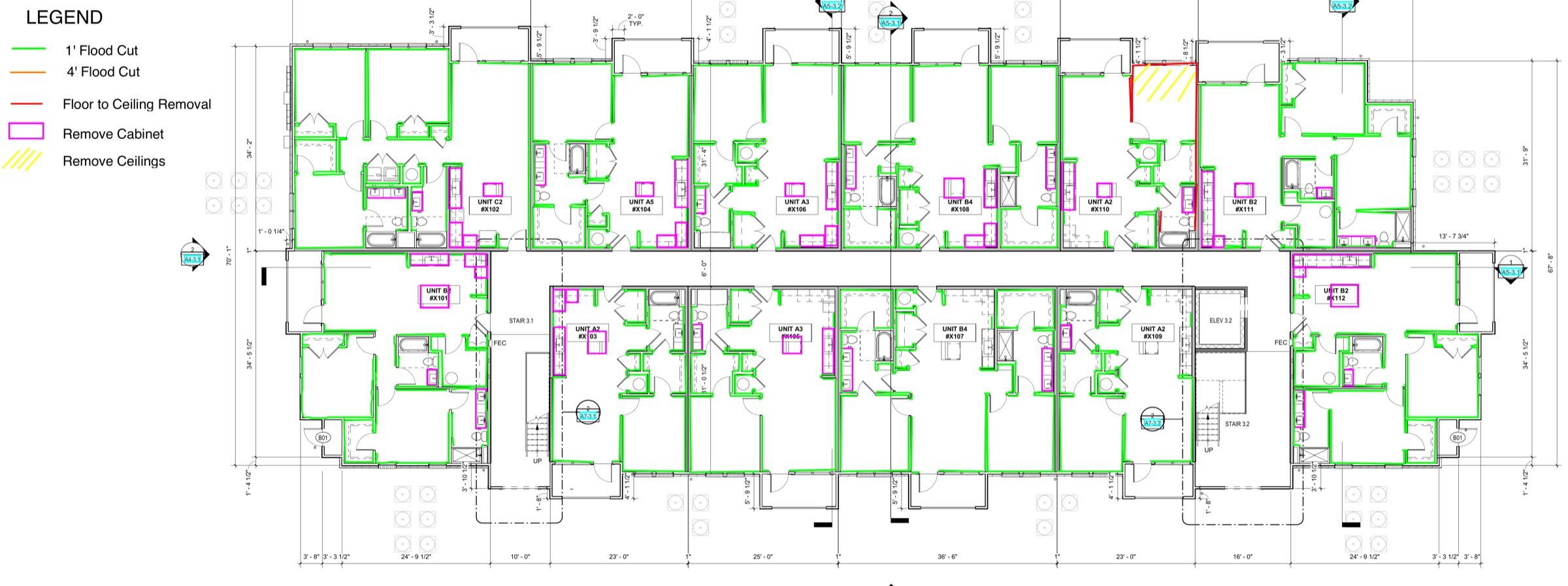
Moisture map from a multifamily water loss. Tap to open full size.
Insurance claims, contractor scopes, landlord and tenant disputes.
Homeowners and insurance
An independent record of the damage and the drying, before the adjuster arrives or after a restoration company has left.
Property managers and landlords
Unit-by-unit documentation after a stack leak or a sprinkler event, so repairs are scoped once and tenants have a straight answer.
Contractors and builders
Verification that materials are dry prior to reconstruction, and a third-party record if a dispute surfaces later. If mold was removed, clearance testing confirms the work first.
Water where it should not be? Call today.
The first 48 hours decide whether a water loss becomes a mold loss. Same-week visits are common.