
Water Damage Testing After a Burst Pipe or Leak
A frozen pipe let go, the water heater failed or a supply line burst. Once the water is off, you need to know how far it went, what has to come out and whether mold has started. We measure it and put it in a written report for you, your contractor and your insurance adjuster.
Water travels farther than the stain.
Water runs along subfloor, wicks up drywall and drips into the ceiling below. The wet area is almost always bigger than what you can see, so we measure before anything is opened.
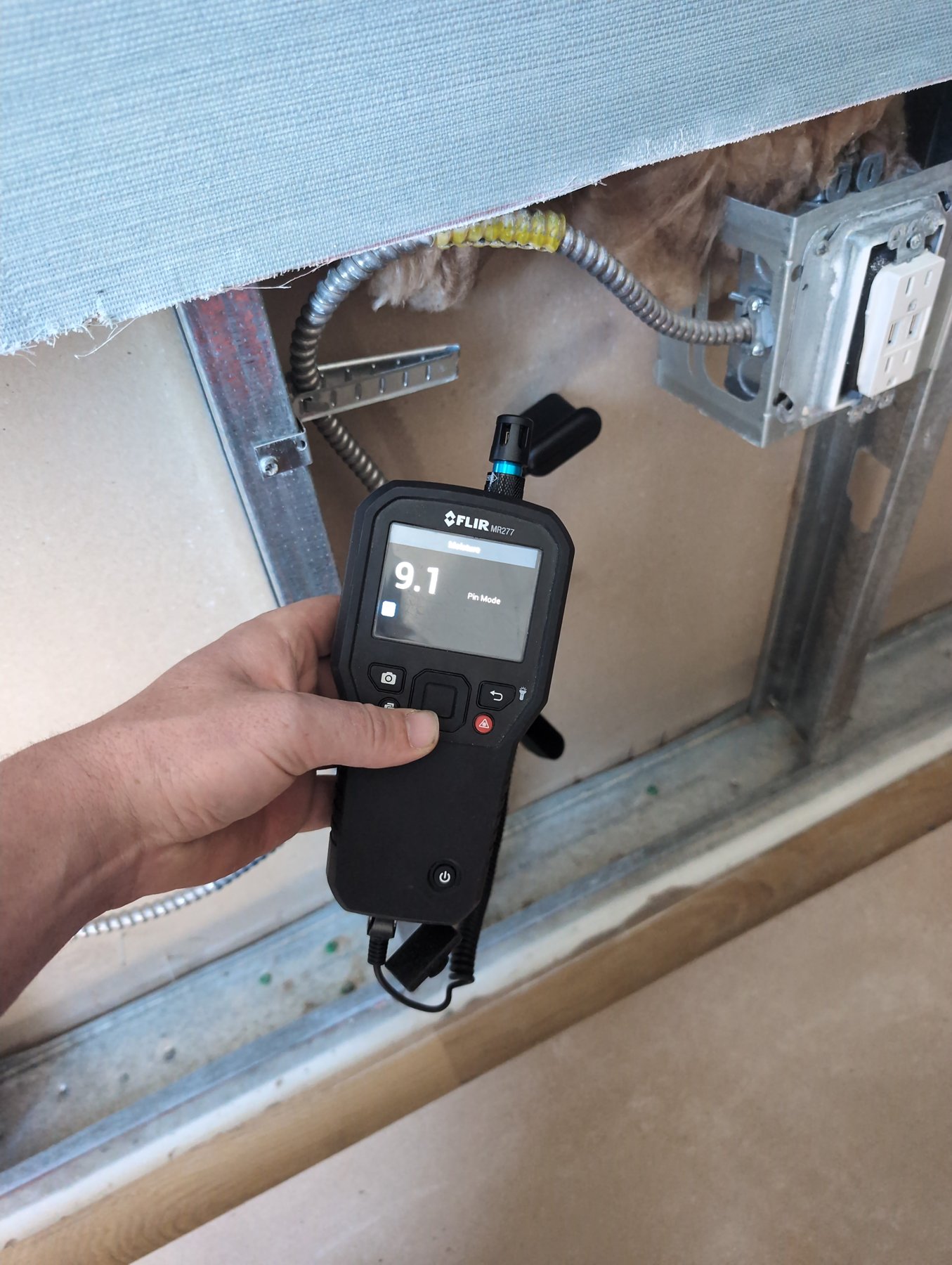
- Infrared and meters. A FLIR MR277 combines a thermal camera with pin and pinless moisture readings, to find wet material behind finishes without opening walls.
- Concrete and block. A Tramex meter reads basement slabs and block walls, where a drywall meter does not work.
- The wet boundary. Readings room by room on drywall, framing, flooring and subfloor, with the edge of the wet area marked on a moisture map.
- Clean or not. The category of water under IICRC S500. Time and warmth move clean water up a category, which changes what can be dried and what has to be removed.
The readings decide, not a guess.
Drywall and other porous materials are read as wood moisture equivalent (WME). Wood framing is read as moisture content (MC). This is the scale we report against.
A map of exactly where the water went.
We mark every reading on a sketch of your home and shade how high the water climbed up each wall. You can see at a glance what is wet, what is dry and what needs to come out, and so can your adjuster.
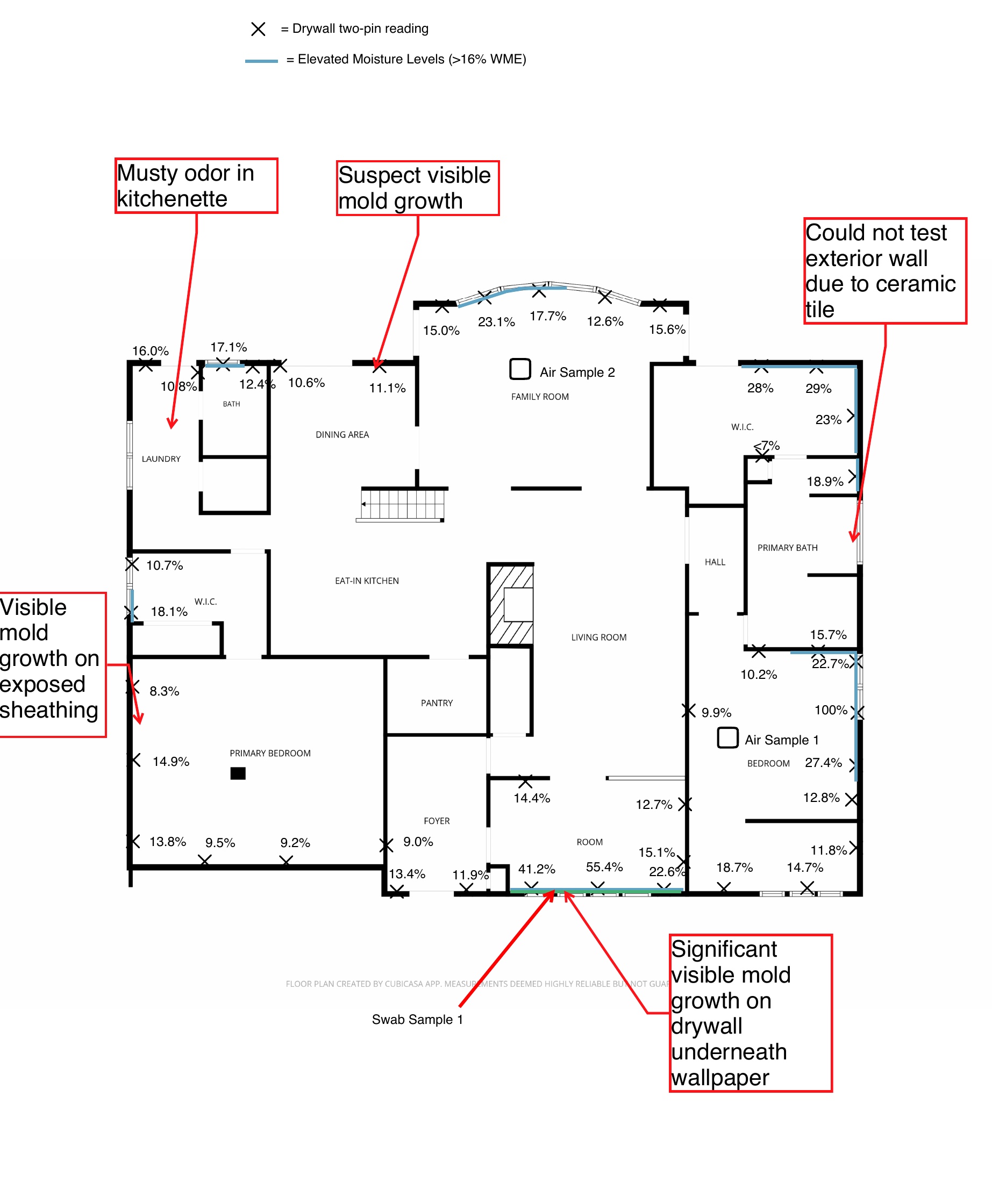
Moisture map drawn on site during a home inspection. Tap to open full size.
Air samples against the outdoors.
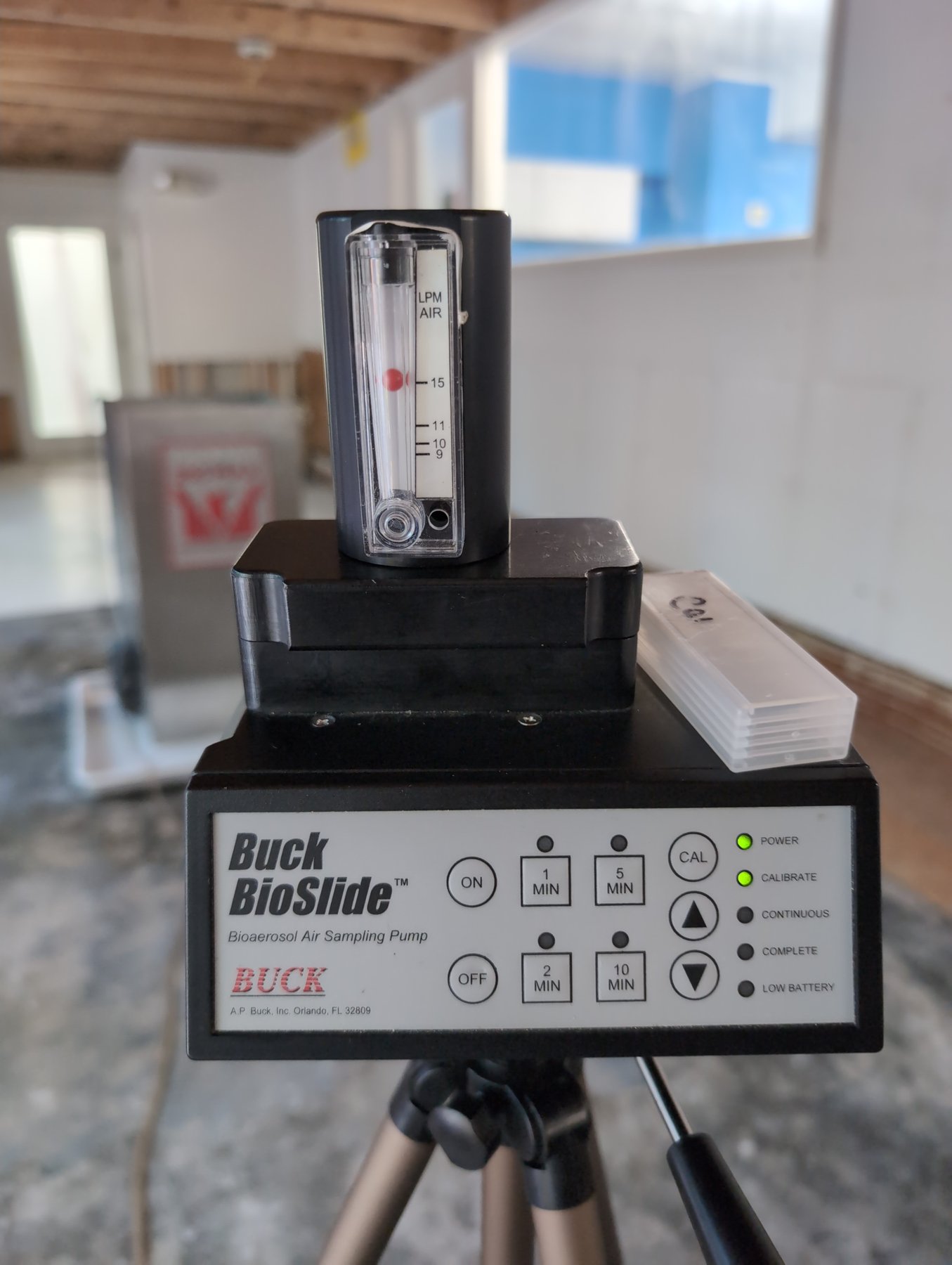
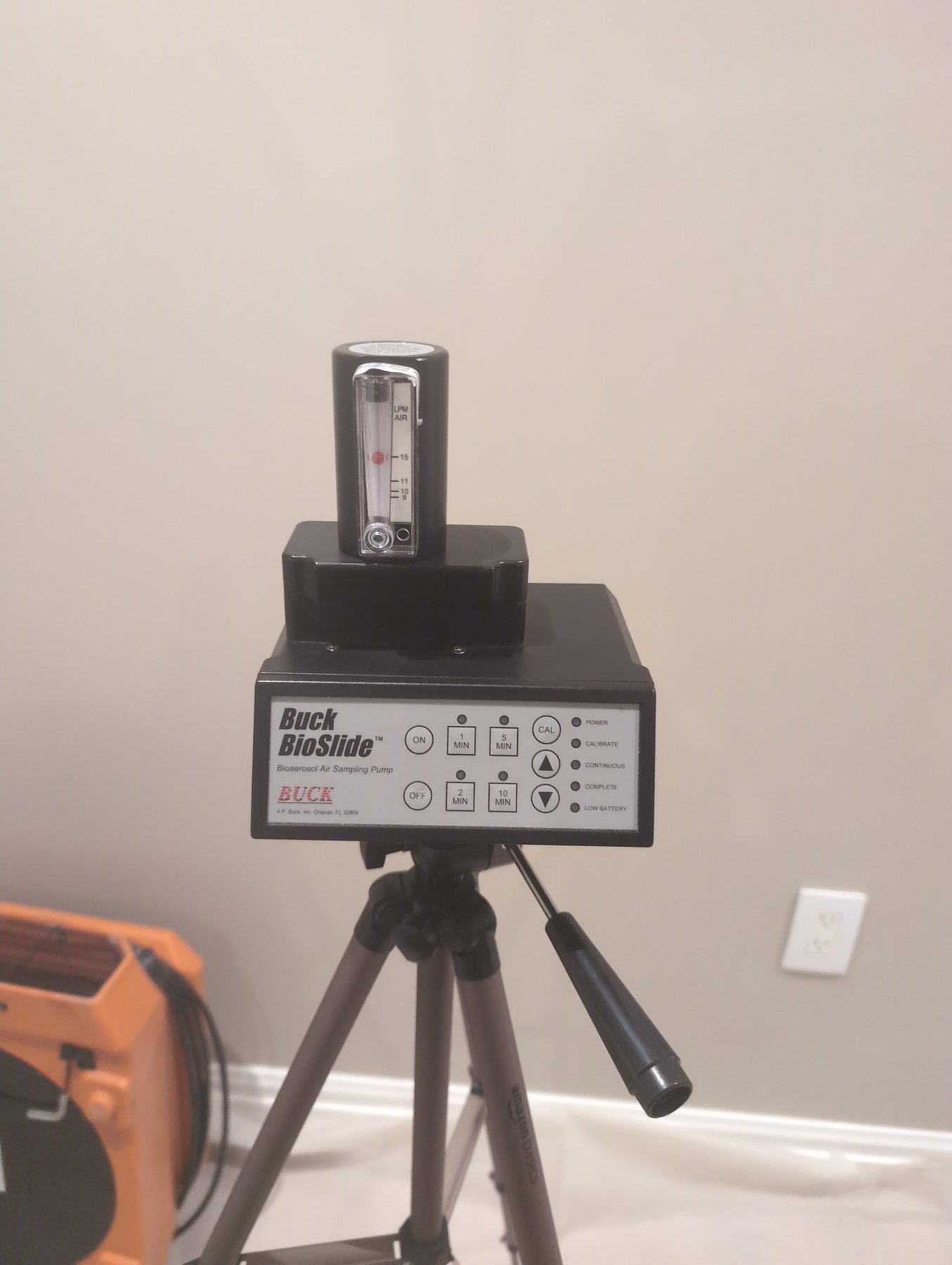
If the water sat for a while, or you notice a musty smell, we take spore trap air samples in the affected rooms and an outdoor control the same day. An accredited lab counts the spores, and we explain what the comparison means.
- Only when it answers a question. If the readings show the materials dried quickly and nothing is visible, we tell you whether sampling would add anything.
- Visible growth. Swab or tape samples on suspect growth, under chain of custody to the lab.
- Results. For mold, the report usually comes within two business days of receiving the lab results, and a 24-hour rush is available.
One record everyone can work from.
We do not sell remediation or repairs, so the findings are not tied to a repair estimate.
Your insurance adjuster
Readings, photos and a moisture map that document where the water went and what it touched.
Your contractor
Which walls, floors and ceilings are wet and how high, so the tear-out is scoped once.
You
A plain answer on what is wet, what is dry and whether mold is a concern, before the walls go back up.
Check the work before reconstruction.
If mold was removed, an independent post-remediation verification checks the work while anything missed is still reachable. We take moisture readings and air samples against an outdoor control, and give you a written pass or fail.
After a burst pipe.
How soon after the leak should I call?
As soon as the water is shut off. We can measure while drying equipment is running, and again before reconstruction to confirm the materials are dry. Call and we will give you our first opening.
How long before mold starts to grow?
EPA guidance is to dry wet materials within 24 to 48 hours to prevent mold growth. Drywall and wood that stay wet longer are more likely to grow mold, which is why readings matter more than how a wall looks.
Will my insurance cover it?
We cannot tell you what your policy covers. Our report documents the damage, with readings, photos and a moisture map, so your adjuster can work from measurements.
Do you do the repairs or the mold removal?
No. We only inspect and test. That keeps the findings independent, and the report tells your contractor exactly what and where.
The leak was in a commercial building or a multifamily property. Can you help?
Yes. We document unit-by-unit damage after stack leaks and sprinkler events for property managers, contractors and insurers.
Had a leak or a burst pipe? Call us.
Weekdays 8 to 5. Tell us what happened and where, and we will quote it on the call. Washington DC, Maryland and Northern Virginia.