Gypcrete, Drying Time and Mold
A gypcrete pour puts a lot of water into a building that is nearly closed. Before baseboard and cabinets go on, it should read under 22% WME. Here is what to watch while it dries.
Why a pour is a water event
Gypcrete goes down wet, across every unit on a floor, at a stage when most of the building is closed in. All of that water has to go somewhere. Some of it leaves as vapor into the air of the unit. Some of it wicks sideways into the bottom plates and wall materials at the edge of the pour.
That is why gypcrete is its own phase in our Three Phase Program, after framing and drywall. Framing can pass at 19% MC and board can read normal, and the pour can still change both. Readings taken before the pour do not tell you what it did to the plates and board around it.
The number: under 22% WME
Before baseboard and cabinets go on, the gypcrete should read under 22% WME. Read it in more than one spot per room, in the open floor and at the edges. If it reads at or above 22%, keep drying and read it again. Trim and cabinets laid over wet underlayment hold the water against wood and paper-faced board, where you cannot see it.
Keep indoor humidity at or below 60% RH while it dries. Above that ceiling, the water leaving the pour has nowhere to go, and it settles into the drywall and framing instead. A hygrometer in each unit, read and written down, tells you where you stand.
Where the trouble shows up
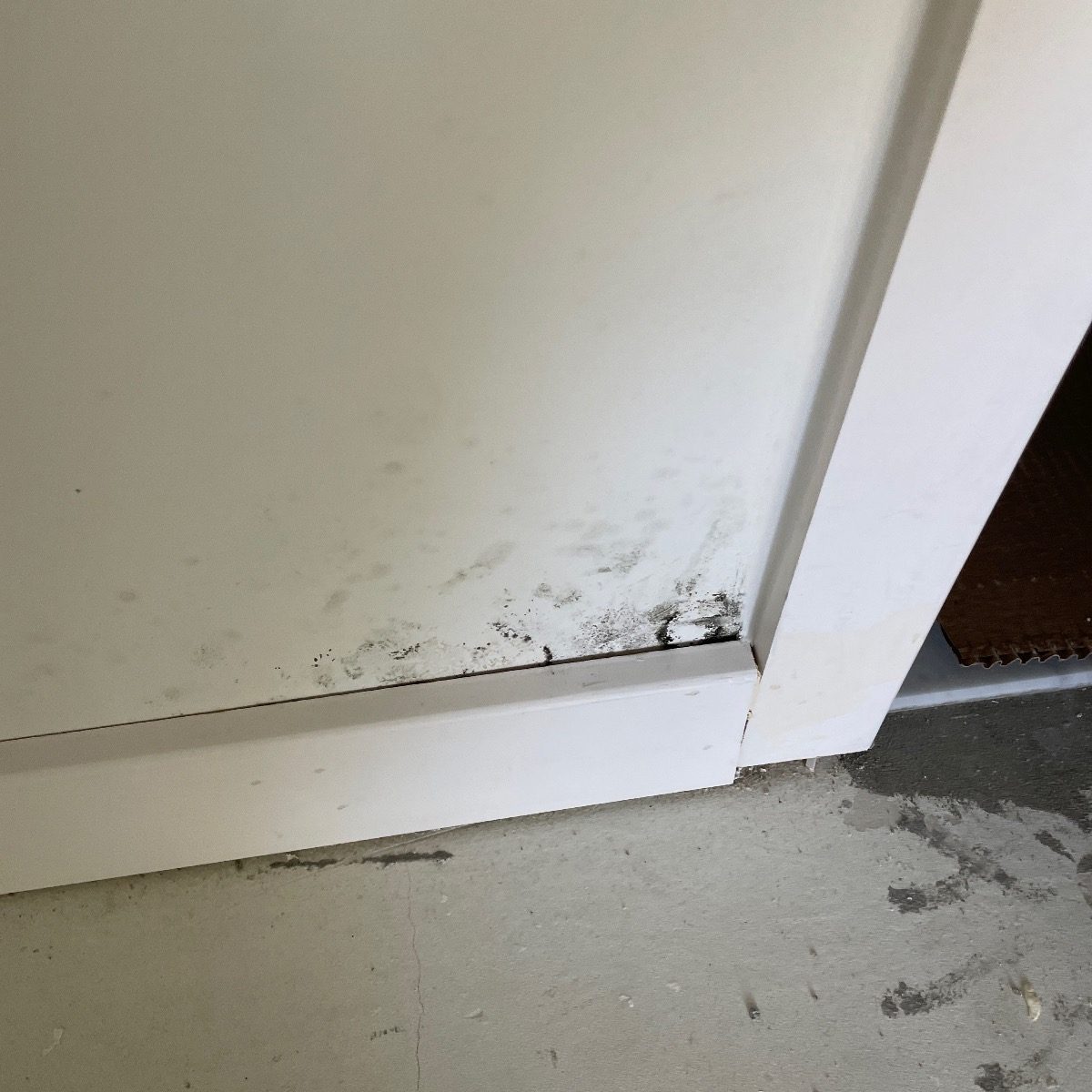
- Bottom plates. Where the pour meets the wall, water wicks up into the framing. Read the plates, not only the floor.
- The perimeter. The edges of each room, behind where baseboard will go, and under future cabinet runs.
- The bottom of the drywall. Normal board reads about 7 to 13% WME. Above 13 to 16% points to humidity, envelope or condensation issues. Above 16% WME is elevated and conducive to mold.
- Debris on the pour. Sawdust, wood scraps, cardboard and drywall cutoffs left on the pour give mold something to feed on. We flag it so it gets picked up.
What we check at the gypcrete phase
At the gypcrete inspection we read the pour, the bottom plates and the lower drywall in each unit, and we look closely at the perimeter where the pour meets the walls.
Any growth is photographed, circled in our field software, and described by room and wall letter, so your crew can go straight to it. Wall A is the one you walk in through, B is to the left, C is the back wall, and D is to the right. We identify individual areas so the remediation contractor can spot treat them instead of blanket treating the floor. After any treatment, we come back and verify.
A board that stays above 16% WME for more than 72 hours is marked for removal instead of being closed in behind baseboard and trim. Drying it is worth trying first. Covering it while it is still wet is the outcome to avoid. The report lists each reading and each finding with its photo. You can see the format in our sample report.
If water gets on it after the pour
A plumbing test, a roof leak or a sprinkler line can put fresh water on gypcrete that was almost dry. Treat it as a new water event. Stop the source. Note whether it is clean, gray or black water, which IICRC S500 calls Category 1, 2 and 3. Set air movers and dehumidifiers, and write it in the log.
Time and warmth move clean water up a category, so a clean leak left over a warm weekend may not count as clean on Monday. EPA guidance is to dry wet materials within 24 to 48 hours to prevent mold growth. The plates and board touching the wet area are what that window protects.
If your project keeps a water event log, like the one in our Moisture Management Program, this is exactly the kind of entry it is for: unit, room and wall, the source, the category, the readings, and the equipment you set.
Where this fits
Gypcrete is the last of three moments that decide whether a wood-frame building grows mold. The first is the framing, covered in How Dry Should Wood Framing Be Before Drywall? The way to keep all three on track is a written plan, which we lay out in What a Construction Moisture Management Plan Should Include.
Read these before trim goes on.
Under 22% WME
Gypcrete reading required before baseboard and cabinets go on.
60% RH
Indoor humidity ceiling while the pour dries. Above it, the water moves into board and framing.
16% WME
Drywall above this is elevated and conducive to mold. Normal board reads about 7 to 13%.
72 hours
A board that stays above 16% WME this long is marked for removal instead of being closed in.
Common questions.
The middle of the room reads dry. Can we set cabinets?
Read the edges and the bottom plates first. The perimeter, where the pour meets the walls, is where water wicks into the framing.
Why is gypcrete a separate inspection from drywall?
Because the pour adds water after the board readings were taken. A wall that read normal before the pour can read elevated after it.
We see a little growth on a plate. Do we stop the floor?
Usually not the whole floor. We identify the individual spot so it can be treated where it is. If visible mold covers 10 square feet or more, call the hygienist that day.
Does debris on the pour really matter?
Yes. Wood scraps, sawdust and cardboard give mold something to feed on, right where the pour is wettest. We flag it by room so it can be picked up before trim goes on.
Read the pour before the trim crew arrives.
The Three Phase Program inspects framing, drywall and gypcrete, with a written report and photos at each phase. Or start with a free session for your crew. Questions? Call 410-897-2629.